[Composite Materials 101] Aerospace Materials Approved by Boeing
<p><img alt="" src="https://www.hcarbon.com/upload/ckeditor/9c499a6a-da0f-40ef-9382-0cd826f226e9.jpg" style="width: 100%;" /></p>
<p> </p>
<p>To lift massive structures like aircraft into the sky, materials must be not only incredibly strong but also lightweight and easily moldable into complex shapes. That’s why today’s passenger planes are built with a variety of advanced composite materials designed to improve both efficiency and performance. Among these, there is one essential yet often unseen material that plays a direct role in passenger safety: aircraft interior materials, notable for their fire resistance, lightweight, and low emission of toxic gases.</p>
<p><br />
While fuel efficiency is a key consideration, safety standards that protect lives demand even stricter requirements and rigorous testing. High-performance composites used in aircraft interiors—often hidden from view—are emerging as critical assets that determine technological competitiveness in the aerospace industry. In this episode, we introduce Hankuk Carbon’s aircraft interior materials, which are officially certified by the global aerospace leader, Boeing.</p>
<p> </p>
<p> </p>
<p><span style="font-size:20px;"><strong>Boeing Material Specifications, Guaranteeing Aerospace Quality</strong></span></p>
<p><br />
The name Boeing is synonymous with aerospace excellence. From fighter jets in 20th-century wars to the commercial aircraft that now dominate skies around the globe, Boeing has long been at the forefront of aerospace technology. More recently, the company has expanded its efforts into space, developing the Starliner spacecraft.</p>
<p><br />
Boeing applies extremely strict technical standards and quality criteria to every material used in its aircraft. Among them, <strong>Boeing's Material Specifications</strong> outline the detailed performance requirements for aerospace-grade materials. Only materials that meet these standards can be supplied to Boeing and its global network of partners.</p>
<p><br />
Hankuk Carbon’s materials have successfully met these specifications, earning official recognition as qualified suppliers of aircraft interior materials. This is more than just a technical certification—it represents a significant milestone, affirming Hankuk Carbon’s quality and reliability in the global aerospace market.</p>
<p> </p>
<p> </p>
<p><span style="font-size:20px;"><strong>Hankuk Carbon’s Boeing-Approved Materials</strong></span></p>
<p> </p>
<p><img alt="" src="https://www.hcarbon.com/upload/ckeditor/fe524d39-d34c-4f75-a433-dcbd446c7caf.jpg" style="width: 100%;" /></p>
<p><br />
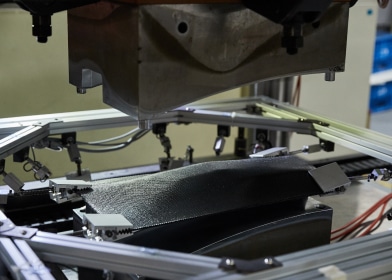
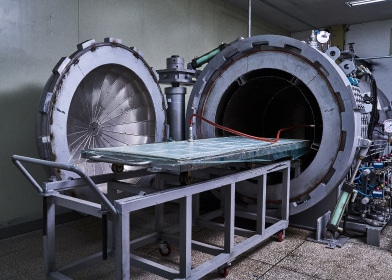
In 2019, Hankuk Carbon received Boeing certification for its <strong>HC1127/7781A & HC1131/7781 Glass Phenolic Prepreg</strong>, a phenolic resin-based material reinforced with glass fiber. Known for its excellent fire resistance, the material significantly enhances fire safety by emitting lower levels of heat, smoke, and toxic gases than conventional alternatives.</p>
<p><br />
This prepreg is typically used in conjunction with Nomex honeycomb cores to produce aircraft interior components, including wall panels, overhead bins, and partitions. Fully compliant with Boeing’s material specifications, it is now listed in Boeing’s global supplier database. It is also being considered for next-generation aerospace platforms such as Urban Air Mobility (UAM), thanks to its optimal balance of lightweight features and safety.</p>
<p> </p>
<p> </p>
<p><span style="font-size:20px;"><strong>Hankuk Carbon’s Aerospace Business</strong></span></p>
<p> </p>
<p><img alt="" src="https://www.hcarbon.com/upload/ckeditor/738c15ba-7ec9-4c41-9746-b521b22656b2.jpg" style="width: 100%;" /></p>
<p><br />
Hankuk Carbon is actively developing its aerospace business as a key driver of growth. Since 2017, we have partnered with Boeing on a joint R&D project funded by Korea’s Ministry of Trade, Industry and Energy, accelerating our development of aerospace-grade composites. In just 21 months, the effort culminated in Boeing certification—a process that goes far beyond simple product development to include mass production readiness, quality assurance, and testing systems. The achievement highlights Hankuk Carbon’s technical excellence.</p>
<p><br />
Hankuk Carbon has also made strategic investments to diversify its business portfolio. In 2017, we acquired a stake in <strong>KCI</strong>, a manufacturer of aircraft parts, laying the foundation for our entry into the aerospace components market. In 2018, we established <strong>KAT</strong>, a joint venture with Israel Aerospace Industries (IAI), to develop vertical takeoff and landing (VTOL) unmanned aerial vehicles. In 2022, the acquisition of Slovakian aerospace parts company <strong>c2i</strong> marked our entry into the European market. These moves reflect Hankuk Carbon's long-term commitment to growing its aerospace business beyond short-term gains.</p>
<p> </p>
<p><br />
By combining the lightweight and safety-enhancing properties of composite materials, Hankuk Carbon is helping to shape the future of the aerospace industry. Boeing certification is a globally recognized mark of trust in our technology and a strategic stepping stone toward expanding the aerospace supply chain and strengthening competitiveness. Hankuk Carbon will continue to lead with innovation and quality, setting new standards in the aircraft materials industry. Stay tuned for more easy-to-understand episodes on the world of advanced composites!</p>
- Composites
- Glass
- Prepreg
- Aerospace
- Interior
- Boeing
See More